Articles published in Akiya Lab | Roopt (Makigumi)
Makigumi, which operates Roopt, constantly researches case studies and other information regarding the revitalization of vacant houses and shares it as columns.
We will explain the logic of how the spread of the sharing economy will impact real estate prices, and introduce specific sharing economy services.
Noi: Hello everyone. I'm Noi, the host of this channel. In this video, we will be talking to Mr. Ueda, President and Representative Director of Gaiax, about the evaluation of investment in old detached houses in modern times.
Ueda: Nice to meet you.
Noi: Last time, we discussed the current social situation in four topics, which will serve as a basis for creating future models. The first is lifestyle and demographics, the second is workation and remote work, the third is the sharing economy, and the fourth is the evolution of technology. This time, we will be discussing the second topic, workation and remote work. Mr. Ueda, please begin.
Ueda: Thank you.
Ueda: We are currently discussing how to evaluate real estate, and just as a declining population affects valuation, the fact that workation and remote work have become acceptable work styles must also be considered in real estate valuation. Remote work, especially with the pandemic, has really changed what is considered normal. By the way, Noi, do you also do remote work or workation?
Noi: Yes. I work remotely most of the time, and when I was a first-year university student, it was during the COVID-19 pandemic, so all my classes were remote, and that's how I lived.
Ueda: By the way, how about the people working around you, Noi?
Noi: Most of them work remotely. I feel like there are almost no people who have to commute to the office every day from Monday to Friday.
Ueda: Where do they all live?
Noi: Many of my friends still live with their parents, but some have moved to slightly larger homes because they work from home a lot. I myself moved to a slightly larger home because I used to live in a very small place, and I ended up spending a lot of time at home. So, there are many people around me who have done the same.
Ueda: Moving to a larger house often means moving a bit further from the city, doesn't it?
Noi: That's right. Because it inevitably becomes more expensive, people move a little further out. Also, with more remote work, people don't go out as much, so some might think it's okay to live a bit further from the station.
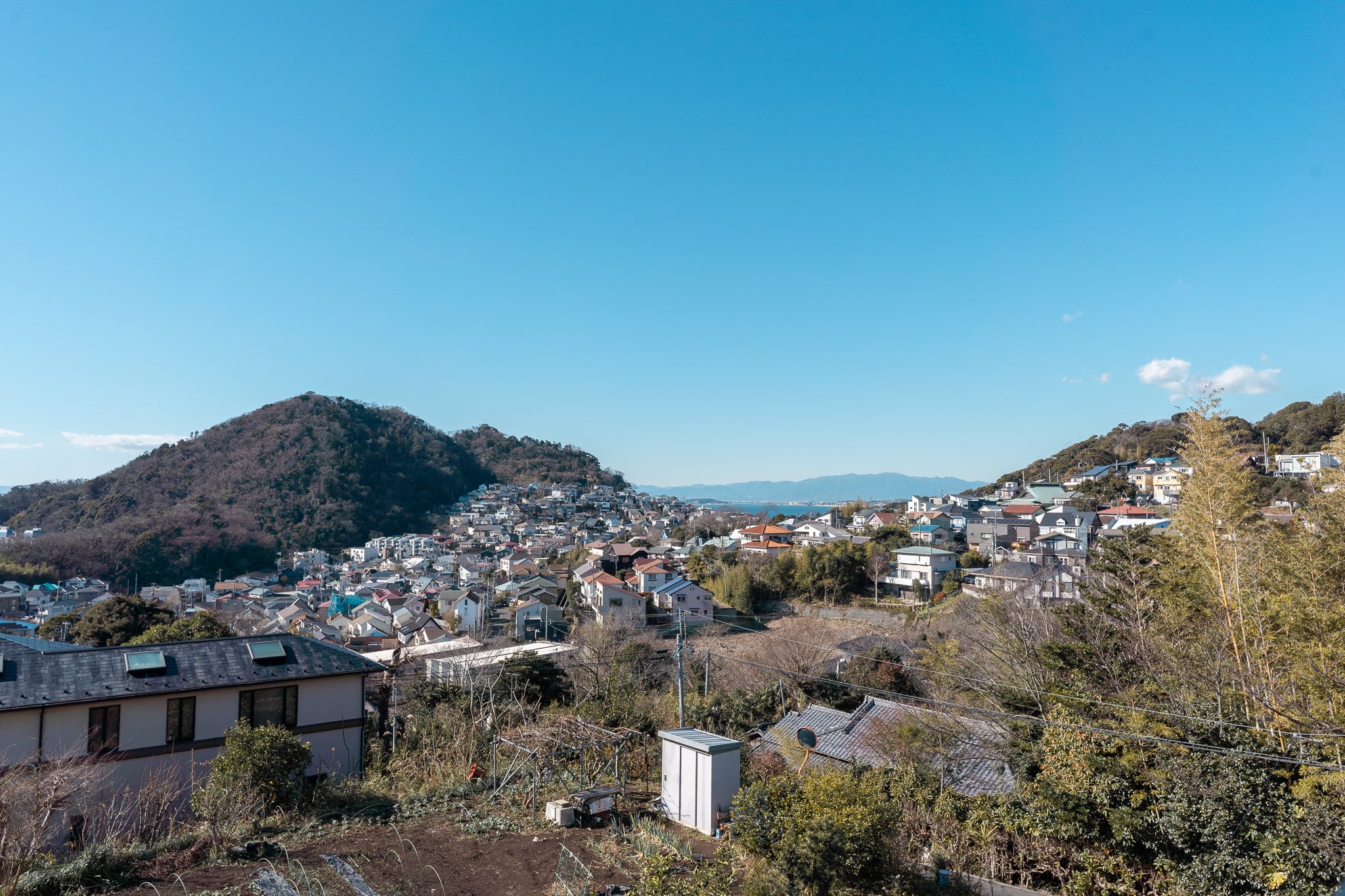
Ueda: That's right. Thank you. At Gaiax, many members have actually left Tokyo. For example, some have moved to Fukuoka or Nara, even though they had hardly ever been there before. I myself have been in Hayama for a long time, and the Shonan area has really seen an increase in people.
For example, many people come to Tokyo from university when they get a job. There are cases where they work from their hometown. Since they have a fair amount of money and leeway, they move to a place near their hometown station with good access and suitable for daily recreation. For example, they might continue living in Hiroshima Prefecture. This kind of thing, based on improved communication infrastructure, has become permissible after the pandemic, which is a significant factor.
Along with this, honestly, various related businesses have also increased, and there's no end to listing them. For example, among the members of the Sharing Economy Association, there's a service called KitchHike's Nursery School Study Abroad. What this is, is that a family lives in a region for one or two weeks and enrolls their child in a local nursery school. This is more related to the sharing economy domain, which I'll explain next. In any case, what it means is that while regional nursery schools are struggling with declining populations, more and more regions are saying, "We can accept immigrants anytime."
In a word, places outside of major cities, rural areas that have experienced significant population decline, are at an advantage. However, compared to the large wave of population decline, it's not as if a huge number of people are moving just because remote work is possible. In fact, it's not that many people are sparsely moving to the countryside for remote work; rather, it's noticeable that people are moving to specific, popular areas because remote work is an option.
The places that are easiest for everyone to imagine, starting from the Kanto region, are Karuizawa, and then Hayama and Shonan. These areas are the most popular. But even beyond that, for example, a member of our company who moved to Fukuoka chose Itoshima. By the way, Fukuoka is strong even within Kyushu, but within Fukuoka, there are two strong areas: Itoshima and Fukutsu, which are like the left and right sides of the coast. Surfing is popular there, and there are stylish cafes, so everyone is moving to these popular places.
Areas that fail to gain popularity will decline. So, it's not that remote work will save the countryside because people are moving there. Rather, while people are moving to the countryside for remote work, not all areas will be saved. Only a select few winning areas will be saved. The land prices in Zushi and Hayama have risen considerably, but outside of these top-tier areas, if you ask if they are strong enough for land prices to rise, I don't think so. It's probably more like maintaining or a slight increase.
Ueda: Now, I'd like to talk a bit more about that evaluation. Until now, the focus has been heavily on whether a place is urban, near a station, or in a densely populated area. In the case of Zushi and Hayama, Zushi Station was good because it was near the station. Hayama, for example, might not have been highly valued because it doesn't have a station, but Hayama actually has beautiful oceans. In this era of remote work, the beauty of the ocean and the scenic ocean views become relatively more valuable than proximity to a station.
Another important factor is brand, and the local community of people. If you go there and the cafes aren't interesting at all, and the businesses aren't interesting at all, and it's just rice fields everywhere, you can't stand it. So, I think places where there are many people who constantly create such enjoyable businesses are more important.
Here's another point: to continuously produce such interesting people, it's relatively easy to have a constant supply of talent if there are universities or similar facilities in the region. Oita Prefecture has Ritsumeikan APU, and the talent that goes there is setting up various businesses around Oita, making it interesting. I think such places also possess potential power.
Until now, evaluations were based on very static or unchanging things like past transaction prices or road values, but if you make one wrong move, it can become a truly popular piece of real estate. I want you to have the mindset of how to evaluate this, and to want to evaluate it.
If a financial institution were to lend money to a cafe, they would ask, "What kind of cafe is it? Is it a popular cafe?" For example, a while ago, popular tapioca drinks were lined up, and many people came, right? They would evaluate whether to lend money or not based on that. In reality, we, as real estate investors, decide whether to buy land by looking at such things. If it's a thriving area, we're willing to pay a high price, but if it's an area that's just going to decline, we go there, look at the atmosphere around us, and if we think, "This is no good," we really won't buy it. I think it will be important in the future to make judgments in a way that is closer to the mindset of such investors.
Noi: Mr. Ueda, thank you for your talk. What kind of changes have you seen around Hayama, where you live, after the pandemic?
Ueda: Actually, quite a lot of interesting people from the Kanto region have gathered in the Hayama and Zushi areas. The people who originally ran businesses locally and these interesting people who moved from Kanto, about 100 of them, have pooled their money to create a BAR in front of Zushi Station. Only the 100 shareholders who invested can participate at night, but they always exchange information among themselves right in front of Zushi Station. Many other projects are also starting up, and they're constantly discussing things like, "Shall we build a sauna together?" or "How about we develop this co-working facility?" It's really interesting.
Noi: That's very interesting. So, after workation and remote work became widespread, are such activities happening in various places?
Ueda: If it weren't for remote work, the number would have continued to decrease, but with it, there aren't 100 or 200 places that have turned around, but I think there are several dozen.
Noi: Thank you. This time, we discussed workation and remote work as part of the current social situation for creating future models. Next time, Mr. Ueda will continue to talk about the sharing economy. Please watch the next video as well. Thank you for watching.
Ueda: Thank you.
First published: Akiya Lab (2024 - now integrated into this site)
FIND YOUR STAY
Feel free to contact us for inquiries about accommodation reservations, move-in consultations, viewing appointments, interviews, etc.
Contact Us