I've started to become interested in share house management, but I want to know if an individual can operate one.
This article introduces information that will be the first step for such people in share house management.
I will explain the differences from general rental properties and the key points of operation.
【Conclusion of this article】 ・No qualifications are needed to operate a share house, and individuals can do it! ・Introducing the pros and cons of share house management ・Introducing 3 key points for successful share house management
Supervisor of this article: Kyoko Watanabe (Makigumi Inc.) Moved to Ishinomaki after the Great East Japan Earthquake. Established Makigumi in 2015. Purchased vacant houses with low asset value and started a landlord business targeting creators. Currently exploring mechanisms for circulating local real estate through sharing and reuse.
Here, I will explain in detail about share house management, focusing on "What is a share house in the first place?" and "You can operate a share house without qualifications."
A share house is a rental property where several people live together in one residence.
Lower rent
These are the appeals of a share house.
As lifestyles become more diverse, share houses have recently become widely recognized as one housing option.
Therefore, the number of people, especially among the younger generation, moving into share houses is increasing.
No qualifications or licenses are required to operate a share house.
If you own a property and have the legal knowledge and know-how necessary for rental management, you can start. If you have a vacant house that you're not using, or if you're interested in operating a share house as a business, you can start immediately.
Since no special qualifications or licenses are required, individuals can operate a share house.
Even when operating individually, it is possible to entrust management to a management company.
There are mainly two ways to operate a share house.
Self-management: You handle all operations and management yourself, and receive the full rental income.
Entrusted management (sublease method): You pay a management fee to a management company to handle management, etc. This reduces your workload compared to self-management and allows you to entrust highly specialized tasks.
Understand the characteristics of each and choose the operating method that suits your style.
Here, I will explain in detail the pros and cons of share house management. Knowing the pros and cons will help you understand the differences from general rental properties and determine if share house management is suitable for you.
Can utilize older properties
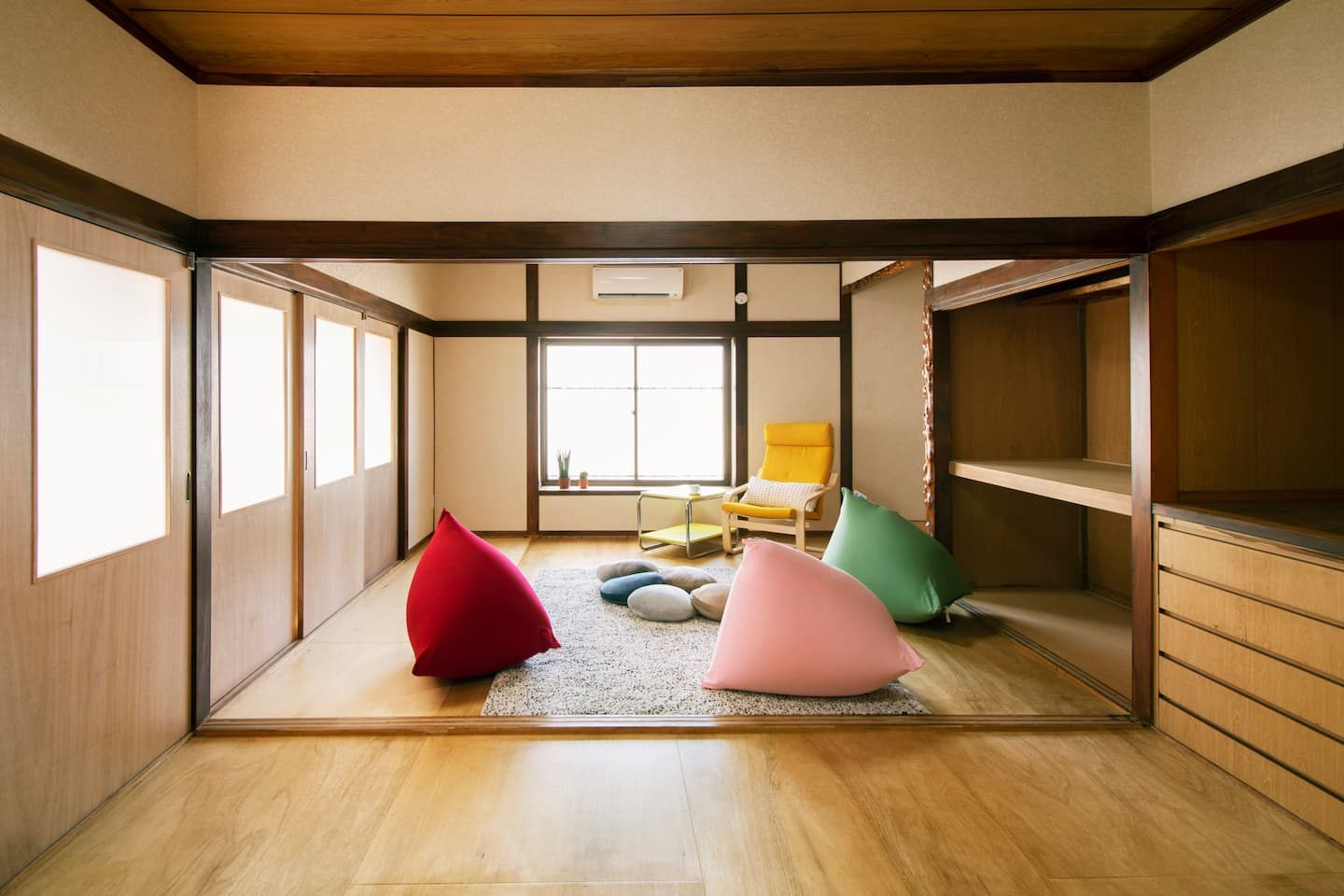
One of the appeals is that even older properties can be easily operated as share houses.
Furnished with appliances
etc.
Therefore, many people do not place much importance on the age of the building.
Recently, there has been an increase in stylishly renovated share houses in old buildings, and older properties can generally be purchased at a lower price.
In conclusion, the fact that the age of the building can become an advantage is a major benefit of share house management.
Share houses can expect high profitability because one property is rented out to multiple people.
Since it's rented to multiple people, even if a vacancy occurs, there's rental income from other residents, which mitigates vacancy risk. Also, share houses furnished with appliances are easy to move into, so even if a vacancy occurs, new residents are likely to be found quickly.
I myself have lived in two share houses, and even when vacancies occurred, new residents moved in quickly. Therefore, share house management tends to offer high profitability.
Share houses have clear differences compared to general rental properties, so they can meet specific needs. Therefore, they can be differentiated as rental properties.
This often matches the needs of younger generations who want to keep rent low. Share houses with concepts such as international exchange or living with pets can be further differentiated.
Thus, the ease of clear differentiation is one of the advantages, making it easier to attract residents who match those needs.
High management workload
One of the disadvantages of share house management is the high management workload.
Cleaning of common areas
There are many things to manage.
Also, it is troublesome to have to make individual contracts with all residents. Depending on the share house, some tasks may be entrusted to the residents.
For example, taking out the trash, replenishing consumables, and cleaning common areas.
Even so, it's not possible to "completely leave it to them" like with general rental properties. Not being able to "just rent it out and forget about it" is a disadvantage of share house management.
Since unrelated people live together, interpersonal conflicts are prone to occur.
In case of trouble, the owner may intervene. Also, due to interpersonal conflicts
FIND YOUR STAY
Feel free to contact us for inquiries about accommodation reservations, move-in consultations, viewing appointments, interviews, etc.
Contact Us