There are numerous museums throughout Japan, serving as important clues to understanding local history and culture.
Furthermore, museums with hands-on exhibits and workshops offer a fun experience for families.
This article introduces 13 recommended museums in Miyagi Prefecture.
The character of museums varies considerably depending on the region and concept, so we hope you enjoy reading about these differences.
First, let's briefly introduce the appeal of museums.
Museums are places rich in fascinating exhibits for those interested in history and culture.
Many exhibits introduce local history, traditions, and cultural assets, offering an opportunity to view the region we live in from a different perspective.
Through exhibits and collections, you can connect with local history and gain new knowledge.
Museums are attractive places where children can learn history in a fun way alongside adults.
With a wealth of hands-on exhibits and workshops, children can deepen their knowledge through real experiences.
Adults also have the opportunity to learn things they didn't know before, satisfying their intellectual curiosity.
Visiting exhibits together as a family can spark conversation and deepen family bonds.
Learning new things and enjoying them together will create more memories and further strengthen those bonds.
The same can be said for friends and couples, not just families.
Now, let's introduce the museums in Miyagi Prefecture.
Each museum has various interesting exhibits, so it's also recommended to go on a museum tour while reading this article.
The "Sendai City Museum" opened in 1961 on the site of Sendai Castle's Sannomaru (third bailey) to store, exhibit, and research materials donated by the Sendai Date family (Date Family Donated Cultural Properties) in 1951.
It exhibits and houses historical, cultural, and art craft materials related to Sendai, including the National Treasure "Keicho Embassy to Europe Materials" (which includes three items, such as the National Treasure "Portrait of Hasekura Tsunenaga," registered as a UNESCO Memory of the World) and important cultural properties like Date Masamune's armor and surcoat.
Sendai is, of course, synonymous with Date Masamune, and with exhibits of Masamune's handwritten letters and lacquerware from the Date family, it's the perfect place to learn about the history of the Date family.
Tohoku University's campus is also nearby, so visiting the museum as part of a stroll is another enjoyable way to experience it.
Address: 26 Kawauchi, Aoba-ku, Sendai, Miyagi 980-0862 Opening hours: 9:00-16:45 Closed: Mondays Admission: General 460 yen (permanent exhibition only) Access: 8-minute walk from Kokusai Center Station on the Sendai Subway Tozai Line Parking: Available Official HP:https://www.city.sendai.jp/museum/
The "Tohoku Gakuin University Museum" was established to collect, organize, store, and display materials related to research results obtained within the university, thereby communicating its activities to society.
It ethnologically unravels the history of Miyagi and Tohoku from ancient excavated artifacts, such as jar coffins used for burial in the Kofun period and numerous stone steles found on the seabed of Matsushima.
It is also a museum constantly updated by Tohoku Gakuin University students, with museum studies students changing and updating exhibits annually as part of their practical training, and organizing student-led event planning.
Since it's within walking distance from Sendai Station, it's also recommended to drop by casually during your Sendai sightseeing.
Address: 1-1-3 Tsuchitoi, Aoba-ku, Sendai, Miyagi 980-0065 Opening hours: 9:30-17:00 Closed: Sundays and holidays Admission: General 200 yen Access: 5-minute walk from Itsutsubashi Station on the Sendai Subway Namboku Line Parking: None Official HP:https://www.ipc.tohoku-gakuin.ac.jp/tgum/
The "Museum of the Earth's Subterranean Forest" in Sendai City, as its name suggests, primarily exhibits archaeological sites excavated from underground.
It preserves and displays the 20,000-year-old Paleolithic site surface excavated from the Tomizawa site in Taihaku-ku, Sendai City, and also features exhibits that allow visitors to imagine the environment and life of that time based on the discovered materials.
It employs a special "architectural civil engineering method" that does not separate the ruins from the earth and has no floor, along with a "preservation treatment method" utilizing cutting-edge scientific technology, to display the ruins in their excavated state.
Facilities that allow you to see ruins as they are are quite rare, so it's definitely worth a visit.
Address: 4-3-1 Nagamachi Minami, Taihaku-ku, Sendai, Miyagi 982-0012 Opening hours: 9:00-16:45 Closed: Mondays Admission: General 460 yen Access: 20-minute walk from JR Nagamachi Station Parking: Available Official HP:https://www.sendai-c.ed.jp/~bunkazai/~chiteinomori/
Did you know that Sendai City, where subways now run alongside JR lines, once had streetcars?
The "Sendai City Tram Preservation Hall" operates as a facility to convey the image of the city tram, which was loved by citizens as a means of transportation for half a century from the late Taisho period and continued to run through the streets of Sendai, to future generations.
You can see the bodies of streetcars, pantographs, and old tickets, allowing you to imagine what Sendai was like when the city trams were running.
We recommend this "Sendai City Tram Preservation Hall" to families and railway enthusiasts alike.
Address: 2-1 Tomizawa Nakagawara, Taihaku-ku, Sendai, Miyagi 982-0032 Opening hours: 10:00-16:00 Closed: Mondays Admission: Free Access: 15-minute walk from Tomizawa Station on the Sendai Subway Namboku Line Parking: Available Official HP:https://www.kotsu.city.sendai.jp/shiden/
Over its more than 100-year history, Tohoku University has accumulated various types of academic materials and specimens. The "Tohoku University Museum" operates to store and manage these academic materials and specimens, and to widely communicate the university's latest research findings to the local community.
You can learn about the history of the earth and the region through various approaches, such as the evolution of life on Earth, rocks and minerals, and old maps of foreign territories.
Additionally, under the title of "All About the Tohoku University Museum" series, special exhibitions are held at external venues such as the Sendai Science Museum.
Over 2 million specimens and materials seem to tell the story of the achievements Tohoku University's research has brought to society.
Address: 6-3 Aramaki Aoba, Aoba-ku, Sendai, Miyagi 980-0845 Opening hours: 10:00-16:00 Closed: Mondays Admission: General 150 yen Access: 3-minute walk from Aobayama Station on the Sendai Subway Tozai Line Parking: Available Official HP:http://www.museum.tohoku.ac.jp/
The "Tohoku History Museum" in Tagajo City, Miyagi Prefecture, is a museum where you can learn in detail about the history and culture of Tohoku, based on historical materials dating back to the Kofun period.
There are many interactive contents for visitors in addition to viewing exhibits, and the museum operates rooted in the local community.
It also offers courses for reading historical materials and ancient documents, which are irresistible opportunities for history buffs.
They also hold fire-starting experiences, which would be interesting for survival enthusiasts.
Address: 1-22-1 Takasaki, Tagajo, Miyagi 985-0862 Opening hours: 9:30-17:00 Closed: Mondays Admission: General 460 yen Access: 1-minute walk from JR Kokufu-Tagajo Station Parking: Available Official HP:https://www.kotsu.city.sendai.jp/shiden/
The "Shiogama Shrine Museum," located within the grounds of Shiwa Hiko Shrine & Shiogama Shrine (Shiogama City, Miyagi Prefecture), which are designated as National Important Cultural Properties, opened in 1965 with the aim of collecting and preserving historical materials related to Shiogama Shrine, and widely communicating its history to society for educational purposes.
On the first floor, numerous valuable cultural assets such as armor, paintings, crafts, ancient documents, and classical texts tell the story of the long history of "Shiogama-sama" and its divine virtues. On the second floor, materials related to the salt industry and fishing, associated with Shiogama Shrine's main deity, Shiotsuchi-no-Oji-no-Kami, are exhibited.
Shiogama Shrine has a long history dating back at least to the Heian period, making this a valuable place to learn a part of that history.
Shiogama Shrine is also beautiful with cherry blossoms, so visiting the museum along with cherry blossom viewing in spring will allow you to discover a different charm of the shrine.
Address: 1-1 Ichimoriyama, Shiogama, Miyagi 985-0074 Opening hours: 8:30-16:30 Closed: None Admission: General 200 yen Access: 15-minute walk from JR Hon-Shiogama Station Parking: Available Official HP:http://www.shiogamajinja.jp/museum/index.html
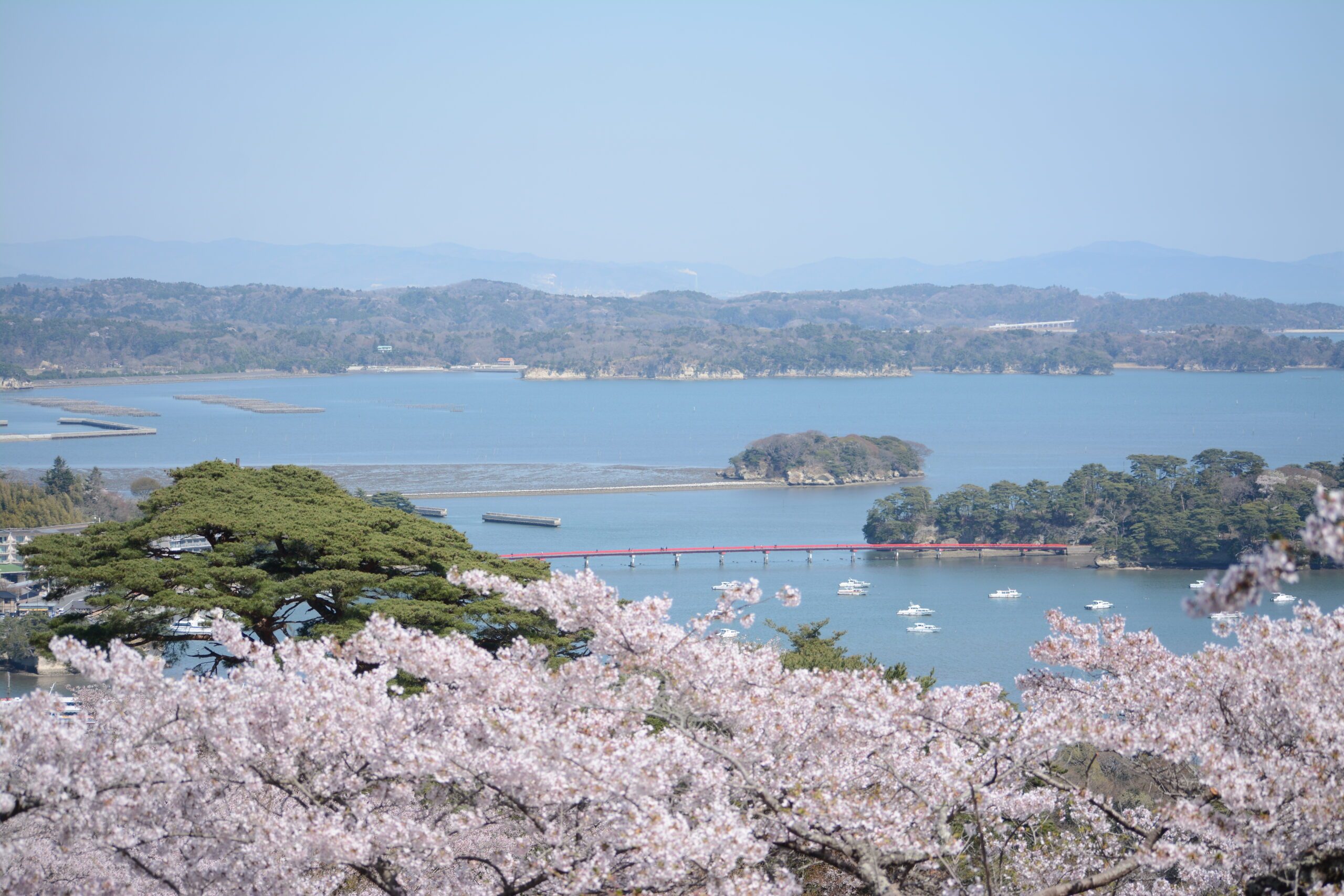
The "Miyagi Matsushima Rikyu Museum" is located on the second floor of "Matsushima Rikyu," a facility that newly opened in 2020 in Matsushima, one of Japan's three most scenic views.
It exhibits the untold story of the birth of "Matsushima Bay," which is a member of the Most Beautiful Bays in the World Club, the geological origins of Tohoku, and life-size models and fossils of "Utatsusaurus," the world's oldest ichthyosaur, operating to convey not only the beauty but also the history of Matsushima.
The facility also includes a garden, restaurants, and shops, making it a place where a wide range of people can enjoy various activities.
Matsushima also has numerous other shops, so we hope you'll visit this museum as part of your Matsushima tour.
Address: 18 Namiuchihama, Matsushima, Matsushima-machi, Miyagi-gun, Miyagi 981-0213 Opening hours: 9:00-18:00 Closed: None Admission: General 600 yen Access: 3-minute walk from JR Matsushima-Kaigan Station Parking: Available Official HP:http://www.shiogamajinja.jp/museum/index.html
The late Shotaro Ishinomori, the creator of Kamen Rider, commuted to a theater in Ishinomaki City by bicycle for 2-3 hours from his hometown of Tome City, Miyagi Prefecture, during his junior and senior high school years, and cherished Ishinomaki as his second home.
This manga museum dedicated to Mr. Ishinomori is located in Ishinomaki City and is loved by a wide range of generations, from children to adults.
In addition to Kamen Rider, it features exhibits on classic works such as Cyborg 009 and Kikaider, and special exhibitions focus on a single work (e.g., Kaiketsu Zorori).
It was affected by the tsunami during the Great East Japan Earthquake, and you can also learn about the recovery process, so it's a must-see museum for those visiting Ishinomaki for the first time.
Address: 2-7 Nakaze, Ishinomaki, Miyagi 986-0823 Opening hours: 9:00-17:00 Closed: Tuesdays Admission: General 900 yen Access: 15-minute walk from JR Ishinomaki Station Parking: None Official HP:https://www.mangattan.jp/manga/
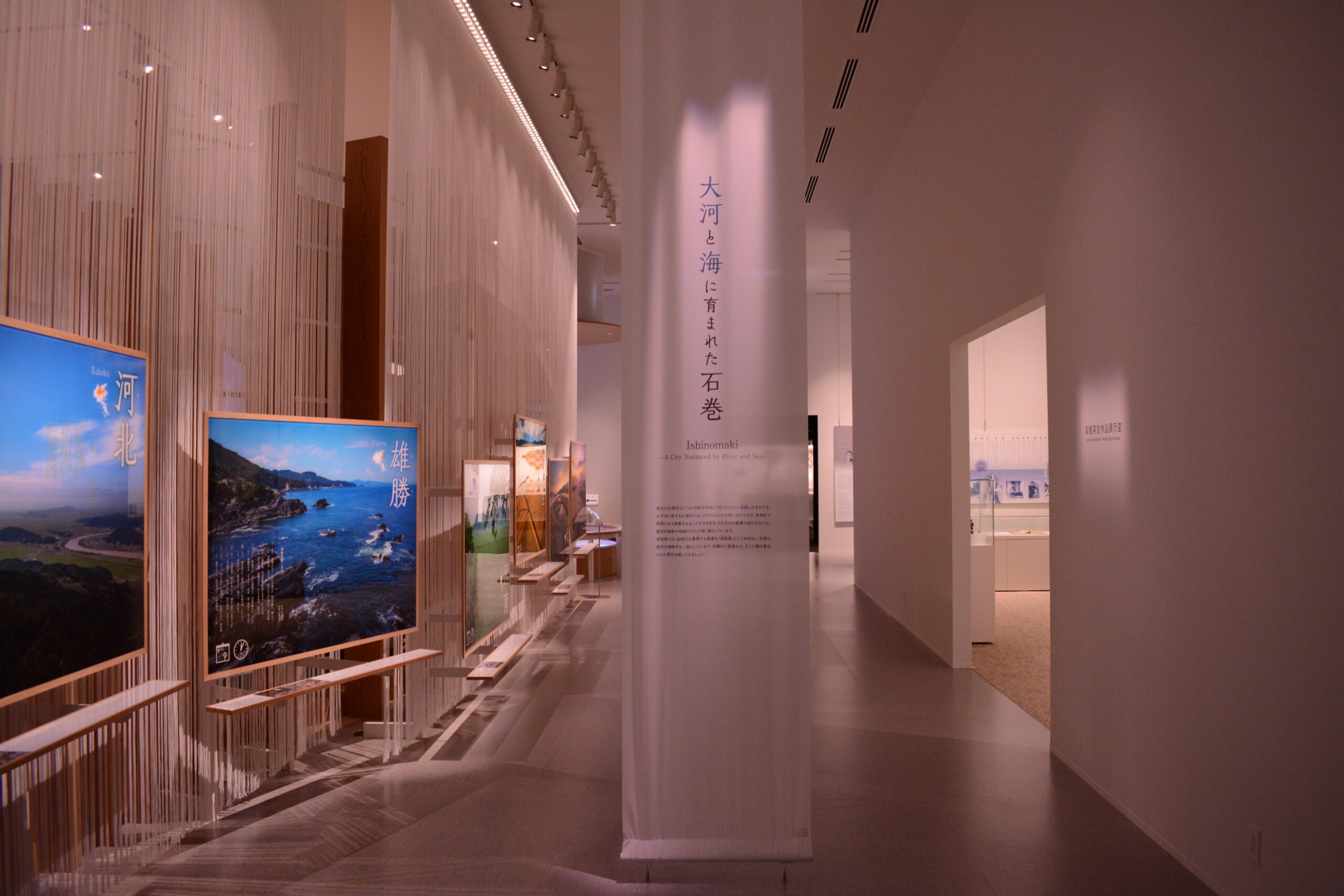
Ishinomaki City once had a museum facility called "Ishinomaki Culture Center," but it was damaged by the tsunami during the Great East Japan Earthquake. However, the stored materials were rescued, and the "Ishinomaki City Museum" was born in 2021, inheriting its legacy.
Located within the cultural facility "Maruhon Maki Art Terrace," designed by architect Sou Fujimoto, the Ishinomaki City Museum allows visitors to learn about the history of Ishinomaki from the Jomon period and the lives of people in the past.
As a new museum, it fully utilizes media art, and the beauty of its exhibits is also worth seeing.
Various events are held at Maruhon Maki Art Terrace, so we hope you'll enjoy many things beyond just the museum.
Address: 1-8 Kaisei, Ishinomaki, Miyagi 986-0032 Opening hours: 9:00-17:00 Closed: Mondays Admission: General 300 yen Access: Approximately 10 minutes by car from JR Ishinomaki Station Parking: Available Official HP:https://makiart.jp/museum/
The "Shotaro Ishinomori Furusato Memorial Museum" was established in Tome City, his birthplace, to honor the achievements of Shotaro Ishinomori, who is hailed as the "King of Manga."
Here, Mr. Ishinomori's history is introduced in a visually engaging way, with a recreation of his room in the legendary apartment "Tokiwa-so" where he lived, and a fan celebrating his "45th year as a manga artist" received from famous manga artists.
Additionally, special exhibitions featuring renowned manga artists from all over Japan are held.
In Japan, where manga culture is deeply rooted, this memorial museum dedicated to Mr. Ishinomori, who can be called its progenitor, is a must-see.
Address: 132 Ishimori, Nakada-cho, Tome, Miyagi 987-0601 Opening hours: 9:30-17:00 Closed: Mondays Admission: General 500 yen Access: Approximately 10 minutes by car from Sanriku Expressway Tome IC Parking: Available Official HP:https://www.city.tome.miyagi.jp/kinenkan/index.html
Tome City is a rich town with a long history and culture dating back to the Jomon period. The "Tome City History Museum" focuses on the theme of "Samurai Culture and the Lives of the Common People," providing an overview of the local history from the Jomon period to early modern times, with a particular focus on the culture and lifestyles of samurai and commoners in early modern times.
It exhibits historically valuable items, such as armor bestowed by Toyotomi Hideyoshi.
Visiting the Sanuma Castle Ruins (Sanuma Yogai Ruins) right next to the history museum will help you better understand the meaning and background of the exhibited items.
Furthermore, citizens have a history of planting cherry trees at the castle ruins, making it a famous cherry blossom spot in Tome City.
Address: 63-20 Sanuma Uchimachi, Hasama-cho, Tome, Miyagi 987-0511 Opening hours: 9:00-16:30 Closed: Mondays Admission: Free Access: 30 minutes by car from Tohoku Expressway Tsukidate IC Parking: Available Official HP:http://www.city.tome.miyagi.jp/rekihaku/
Finally, let's change the pace a bit and introduce the "Kesennuma Shark Museum," Japan's only shark museum.
With the concept of "an experiential museum to learn about the bond between Kesennuma's sea and people," you can learn about "sharks," for which Kesennuma boasts the highest catch in Japan, and also discover Kesennuma's past, present, and future through four zones: "Memories of the Disaster," "Bonds," and "Living with the Sea."
Additionally, within the same facility, there is an "Ice Museum" where you can learn about ice, which is essential for the distribution of landed seafood, in a fun way.
The facility also has restaurants and shops, making it a beloved place not only for tourists but also for local residents.
Address: 7-13 Uoichibamae, Kesennuma, Miyagi 988-0037 Opening hours: 9:00-17:00 Closed: None Admission: General 500 yen Access: Approximately 10 minutes by car from Sanriku Expressway Kesennuma Port IC Parking: Available Official HP:https://www.uminoichi.com/index.html
This time, we introduced museums in Miyagi Prefecture.
Even though they are all called "museums," the exhibition contents and concepts vary greatly from facility to facility, and I believe there are new learnings and discoveries at each museum.
If there's a museum that interests you, please do visit it.
FIND YOUR STAY
Feel free to contact us for inquiries regarding accommodation reservations, move-in consultations, viewing appointments, media coverage, etc.
Contact Us